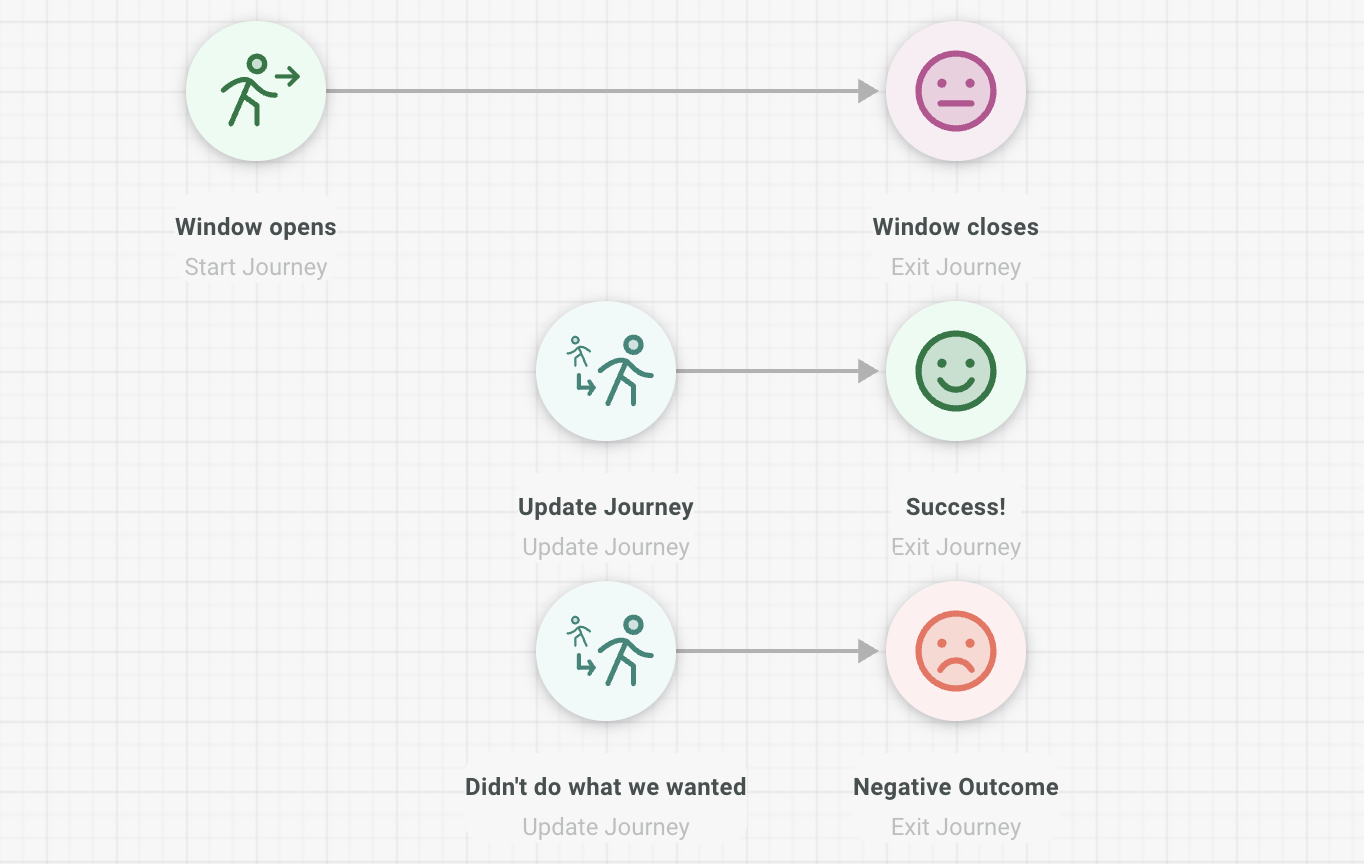
3 Golden Rules of Journey Design
Journeys is built for marketers aiming to influence customer behavior; changing behavior takes time, resources, and data, but Journeys helps you reach your goals quickly by focusing on achieving your desired outcome.
Whether that’s driving a purchase, fostering long-term relationships, or improving overall business impact, Journeys provides the tools and insights you need to see fast results and make the most of your marketing efforts.
We’ve compiled key tips to make using Journeys easier and more effective; our three golden rules are designed to inspire you to maximize your Journey’s impact and grow your business.
What are the 3 Golden Rules?
Journeys provide so many possibilities, so we know how easy it can be to get carried away.
We have developed these three Golden Rules to help you to achieve meaningful results whilst focussing on what is important to your company:
-
Choose an objective
-
Keep it simple
-
Nudge with intent
Choose an objective
Thanks to Journeys versatile design, it provides endless possibilities, so when you first open a new canvas you may think – where do I begin?
We recommend that instead of focusing on customer touchpoints or campaigns, start by asking yourself, "Why am I building this journey? What’s the goal for my business?"
Define what success looks like for you and then build the Journey with this at its core; one clear objective per Journey is the best way to not only keep your Journey simple, but to easily manage your analytics.
Once you’ve defined your goal, begin by adding an Exit step that represents the outcome you want. Journeys provides several choices of exits so that you can track customer’s behaviours as they move throughout your Journey.
-
Positive Exits: Show that your objective was successfully achieved.
-
Neutral Exits: Mark the end of the opportunity window when no significant customer actions were detected.
-
Negative Exits: Track behaviors that either didn’t meet your objective or had a negative impact.
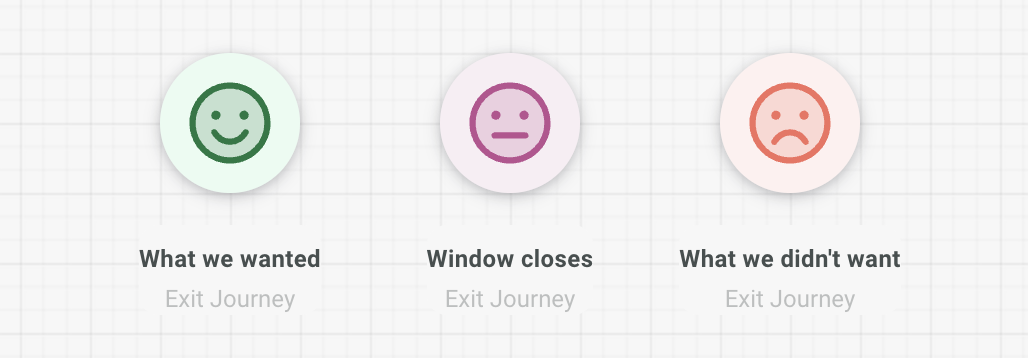
Clearly defining each exit helps your journey report on outcomes and provides insights into why certain results occur. This understanding can guide you in making improvements.

Keep it simple
Starting with a complex or lengthy journey can be overwhelming; instead of aiming for perfection, focus on building something simple to get results faster. Remember, you can always edit your Journey when you’ve had a chance to evaluate its initial success.
For a new Journey, plan a window to observe customer actions and gather insights before making decisions.
Keep these tips in mind as you begin:
-
Plan a realistic window: Your campaign won’t stay relevant forever. Choose a time frame that makes sense for your journey and build around it.
-
Limit your Journey length: We would recommend 3-5 sends per Journey with Split steps and Update Journey steps to monitor impact at every step.
-
Consider cadence: After setting your time frame, decide how often to send messages. Sending too often can lead to unsubscribes, while sending too rarely might miss opportunities. Use past campaign data to find the right balance for your audience and industry.
-
Use your data: Insights into each Journey can inform you on how to build your next one; define the optimal cadence, review the impact of each campaign, and adjust your messaging based on how your audience responded.
Nudge with intent
Thanks to Real-time and Scheduled Journeys, you can decide which behaviours you want to target and exactly how to target them.
While Scheduled Journeys are useful for planned promotions, Real-time Journeys allow you to react to customer behaviours when they are happening.
Whichever you choose, you should see each Campaign as an opportunity to nudge your audience towards your desired behaviour, thus reaching your desired outcomes.
Here are a few tips to get the most out of Journeys:
-
Use Decision steps (Real-time Journeys) to split your audience and send separate Campaigns tailored to each branch
-
Split steps (Scheduled Journeys) can be used to segment your Journey and review the results from different marketing strategies
-
Define Negative or Neutral Exits for non-responders or soft engagements, so you can track journey outcomes holistically
-
Add Positive Exit Steps at every split to track conversions
-
After one-time sends, review impact and adjust messaging or cadence for next time.
-
For recurring journeys, review every 30–60 days and retire those with falling engagement
-
Use Early Exit Steps (Real-time Journeys) to remove customers from the Journey if they complete the desired behavior so that they don’t receive outdated marketing