Welcome Template
The Welcome Moment aims to send real-time communications when website visitors subscribe or sign up to your website, newsletter, webinar, etc. These visitors will receive a personalized welcome message to trigger their interest and get them excited about your brand. First impressions are important, so by interacting with them at this moment in time, they will feel embraced by your brand.
To track when a subscribe is happening, the signup event needs to be tracked. The signup signal with details on what the visitor is signing up for is then sent to the Moments application. These signals are then captured by Welcome Moment:
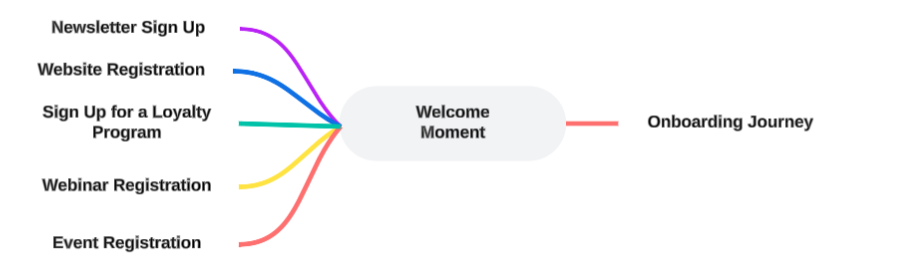
Following properties are available for the Welcome Moment template. (Check out the topic on creating a Moment for more details.):
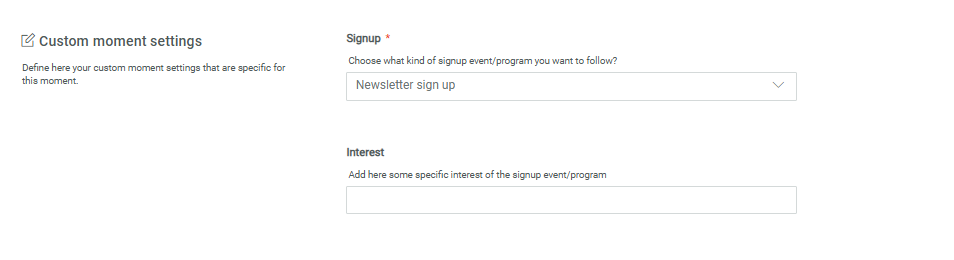
Signup — Contains the type of signup. You can choose from newsletter, webinar, game, event, website or program. By setting the type, the Moment will only listen to signals of that specific type and ignore the others. This means that you can treat signups differently depending on the type.
For example, when a customer signs up for your website, you want to send them a welcome message, but when the customer signs up for your webinar, you send them the program.
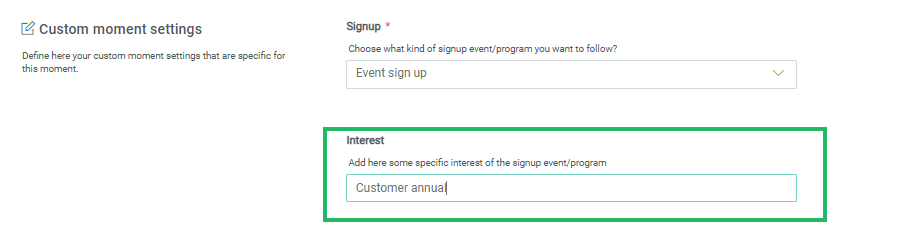
Interest — Contains the category of interest. This is a free text field and can be used to specify further details, such as the sports section for the website, or Finance for the newsletter.
Example:
First create the Welcome Moment and fill out the name, description and select the Audience Configuration to apply to this Moment.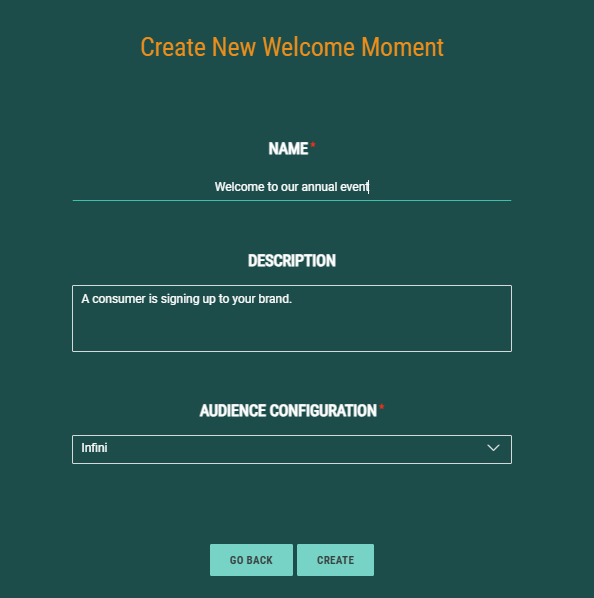
Next, in the properties, select the type of signup this Moment should react to.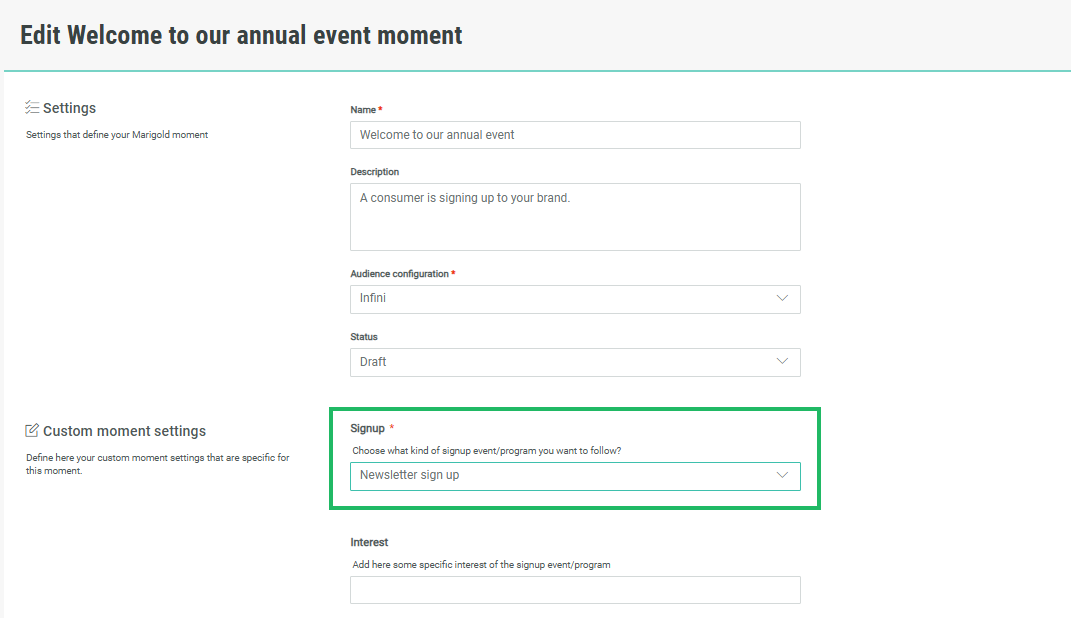
You can choose from Newsletter sign up, Webinar sign up, Event sign up, Game registration, Website registration and Sign up for a loyalty program. This implies that the Moment will only listen to signals of that specific type.
You can also enter a free text to describe the category for the selected sign up event, such as Royal news, Politics, Tennis,... These signup types and categories can then be used for filtering and personalization.